Successive Blending CVC Word Cards - SOR Aligned
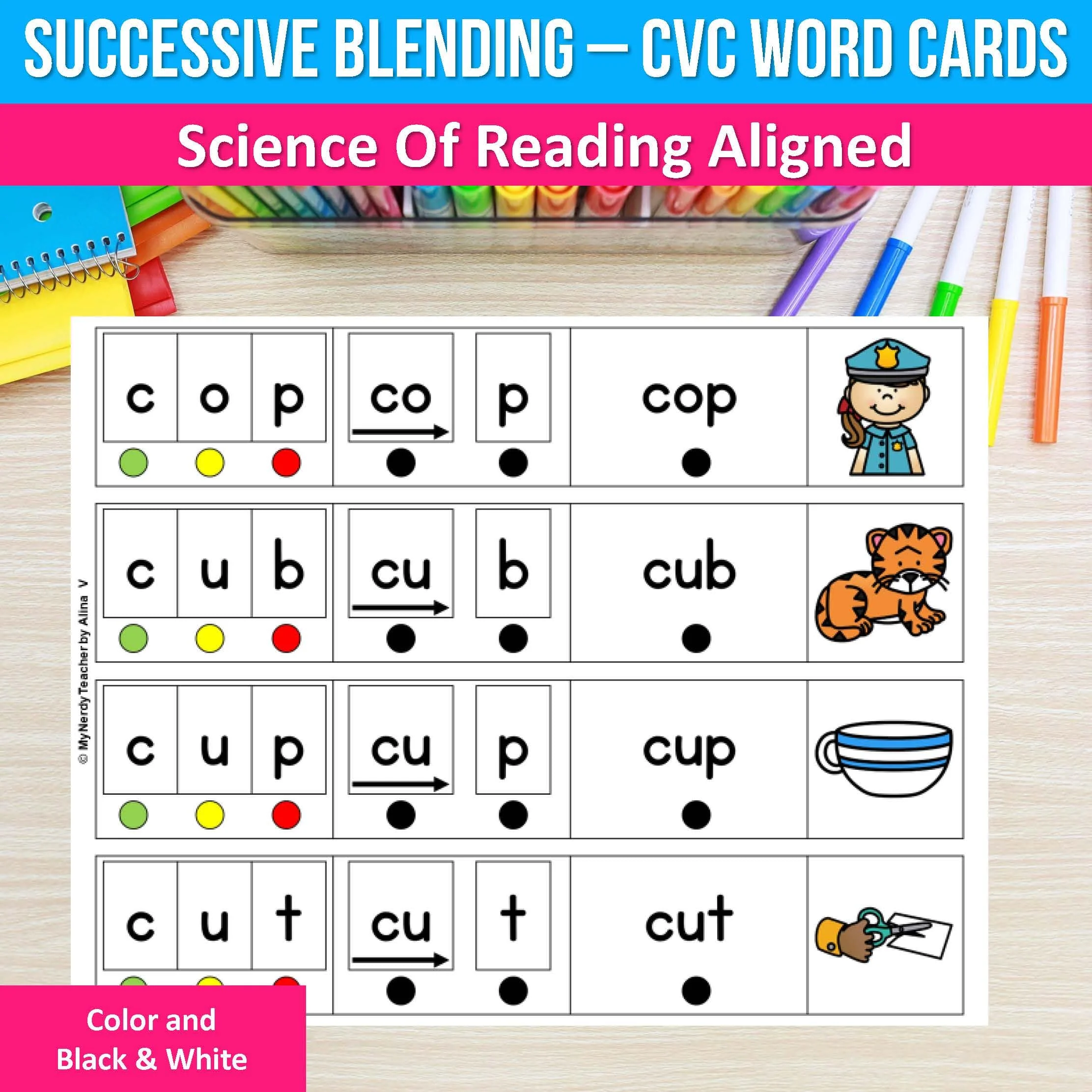
Are you looking for some fun and engaging Science of Reading aligned cards for K to 2nd Grade? This CVC Word Center is for you.
RESOURCES INCLUDED:
- Successive Blending CVC Words (140 words, color and black and white)
This bundle is included in The Ultimate Science of Reading Literacy Centers Mega Bundle. Click here to find out more:
⭐⭐⭐ The Ultimate Science of Reading Literacy Centers Mega Bundle⭐⭐⭐
Successive blending is the ability to combine individual sounds together to form a word. This skill is important for learning to read and spell, as it helps children to connect the sounds they hear to the letters they see on the page.
For example, if a child is presented with the sounds "c-a-t," they should be able to blend those sounds together to say the word "cat."
Successive blending is one of the key phonemic awareness skills that children need to develop in order to become proficient readers and spellers.
This skill involves being able to "hear" the individual sounds in a word and then combine them together to say the word. It is a useful skill for helping children to connect the sounds they hear to the letters they see on the page, which is an important step in learning to read and spell.
To practice phonemic awareness, you can try the following activities:
- Sound segmentation: Say a word and have the child repeat it, then have the child say each sound in the word separately. For example, for the word "cat," the child would say "c-a-t."
- Sound blending: Say a sequence of sounds and have the child blend them together to form a word. For example, you could say "c-a-t" and the child would say "cat."
- Sound substitution: Have the child say a word, then substitute one of the sounds in the word with a different sound. For example, if the child says "cat," you could have them say "bat" by substituting the "c" sound for the "b" sound.
- Rhyming: Have the child listen to two words and determine if they rhyme. For example, "cat" and "hat" would be considered to rhyme.
- Beginning sounds: Have the child listen to a word and identify the first sound in the word. For example, for the word "cat," the child would identify the "c" sound as the beginning sound.
You can also try using phonemic awareness games and activities, such as word puzzles, phonemic matching games, and phonemic sorting activities. These can help to engage the child and make phonemic awareness practice more fun.
Product Information
Product Information
Shipping & Returns
Shipping & Returns
Description
Are you looking for some fun and engaging Science of Reading aligned cards for K to 2nd Grade? This CVC Word Center is for you.
RESOURCES INCLUDED:
- Successive Blending CVC Words (140 words, color and black and white)
This bundle is included in The Ultimate Science of Reading Literacy Centers Mega Bundle. Click here to find out more:
⭐⭐⭐ The Ultimate Science of Reading Literacy Centers Mega Bundle⭐⭐⭐
Successive blending is the ability to combine individual sounds together to form a word. This skill is important for learning to read and spell, as it helps children to connect the sounds they hear to the letters they see on the page.
For example, if a child is presented with the sounds "c-a-t," they should be able to blend those sounds together to say the word "cat."
Successive blending is one of the key phonemic awareness skills that children need to develop in order to become proficient readers and spellers.
This skill involves being able to "hear" the individual sounds in a word and then combine them together to say the word. It is a useful skill for helping children to connect the sounds they hear to the letters they see on the page, which is an important step in learning to read and spell.
To practice phonemic awareness, you can try the following activities:
- Sound segmentation: Say a word and have the child repeat it, then have the child say each sound in the word separately. For example, for the word "cat," the child would say "c-a-t."
- Sound blending: Say a sequence of sounds and have the child blend them together to form a word. For example, you could say "c-a-t" and the child would say "cat."
- Sound substitution: Have the child say a word, then substitute one of the sounds in the word with a different sound. For example, if the child says "cat," you could have them say "bat" by substituting the "c" sound for the "b" sound.
- Rhyming: Have the child listen to two words and determine if they rhyme. For example, "cat" and "hat" would be considered to rhyme.
- Beginning sounds: Have the child listen to a word and identify the first sound in the word. For example, for the word "cat," the child would identify the "c" sound as the beginning sound.
You can also try using phonemic awareness games and activities, such as word puzzles, phonemic matching games, and phonemic sorting activities. These can help to engage the child and make phonemic awareness practice more fun.